

Baccarat is one of the most elegant and straightforward games in the casino world. It combines fast-paced excitement with a very low house edge. Whether you’re playing in a luxurious resort or through jLjL7’s online platform, understanding this game opens the door to smart, enjoyable gambling. This article breaks down the rules, betting mechanics, and payouts to ensure you master every hand confidently.
Fundamentals of baccarat rules and objectives
Cards in baccarat carry different point values. Aces count as 1, while 10s, Jacks, Queens, and Kings are all worth zero. Only the last digit of a hand’s total counts, so if your cards total 14, your score is 4. This simple twist is what keeps the pace swift and eliminates strategic calculations like in blackjack.
The core objective is to bet on which hand, Player or Banker, will end up closest to 9. A third option, the Tie, is available when you believe both hands will end up equal. Two cards are dealt to each hand, and sometimes a third is drawn based on specific rules. The hand whose final point total is higher wins the round.
A third card is only drawn under particular conditions. If either the Player or Banker has 8 or 9 points (a natural), no more cards are dealt. Otherwise, the third-card rules apply. The Banker’s response varies depending on both their score and the Player’s third card. While it sounds complex, the dealer handles this automatically.
Permissible wagering options in Baccarat
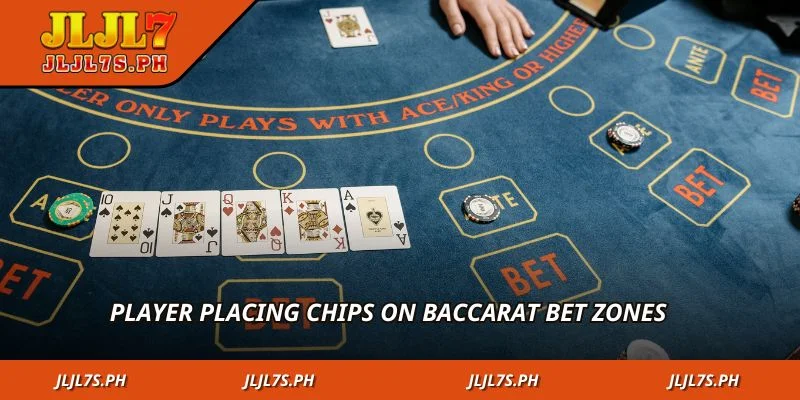
Once the rules are understood, it’s time to explore how bets are placed in the game. While you can’t influence the cards, knowing your betting options and how they work gives you a real edge.
The Player and Banker bets in baccarat
These are the two primary bets in the game and they’re placed before any cards are dealt. Betting on the Player pays 1:1, while betting on the Banker also pays 1:1 but includes a 5% commission, reducing its payout to 0.95:1. Despite this commission, Banker bets statistically win slightly more often, making them a preferred choice for many players focused on probability.
Read more Asian Handicap – Odds Breakdown and Winning Tactics
Tie bet and its high risk
The Tie bet is the riskiest wager in baccarat, offering a payout of 8:1 or sometimes 9:1 depending on the casino. While the reward is tempting, its probability is low, only about 9.5% of outcomes. This bet appeals to thrill-seekers, but it carries the highest house edge among the three main options, making it unsuitable for conservative playstyles. Specifically, the house edge for a Tie bet is over 14%, compared to just 1.06% for Banker and 1.24% for Player bets.
This means that over time, the casino is far more likely to profit from Tie wagers. Some players are lured by the flashy payout, especially in short-term sessions, but seasoned gamblers often avoid it unless they’re following a specific high-risk strategy or betting for entertainment rather than consistency. While it adds excitement to the table, relying on Tie bets regularly is statistically disadvantageous.
Side bets and variations
Modern versions of baccarat often introduce side bets for additional excitement. These include wagers like Player Pair or Banker Pair, which pay out if the first two cards dealt form a pair. There are also bets on specific point spreads or even progressive jackpots. While they spice up gameplay, these options often come with worse odds and should be approached with caution.
For example, the Pair bets typically have a house edge of over 10%, much higher than standard Banker or Player bets. Some side bets, like the Dragon Bonus or Big and Small, depend on the final point differential, adding layers of strategy and variability. Progressive jackpot side bets can offer life-changing payouts, but they rarely hit and usually require placing an extra wager every round. These bets appeal to players seeking variety and higher risk-reward scenarios, but they should be treated more as entertainment than a winning tactic.
Detailed payouts for Baccarat betting options in casino games

Understanding payout rates helps you manage expectations and make informed choices while playing this game. Though it’s largely a game of chance, the odds and house edge differ slightly among betting options.
Payout comparison among bets
Standard payouts in baccarat are clear-cut. A winning Player bet pays 1:1. A Banker bet pays 0.95:1 due to the commission. A Tie pays 8:1 or 9:1. These payouts don’t change, but their value depends on how often each outcome occurs. Statistically, the Banker wins just over 50% of the time, the Player slightly less, and the Tie the least frequently.
House edge breakdown
The house edge in baccarat is one of the lowest among casino games. Betting on the Banker comes with a 1.06% house edge, while the Player bet is slightly worse at 1.24%. The Tie bet, despite its big payout, carries a house edge of around 14.4%, making it significantly riskier. These figures show why serious players often stick to Banker and Player wagers.
Winning strategies and bankroll tips
Although the game is mostly luck-driven, smart money management improves your longevity. Avoid chasing losses or increasing stakes blindly. Flat betting, where you keep your wager amount constant, is a solid beginner strategy. Tracking patterns like streaks may be tempting, but they don’t change the odds. Discipline and patience are more reliable than chasing imagined trends.
Conclusion
Baccarat stands out as an elegant, accessible game with straightforward rules and clear betting options. With one of the lowest house edges in the casino, it attracts both high-rollers and casual gamers alike. Whether you’re learning the mechanics, placing your first wagers, or comparing payout odds, having a solid grasp of the basics will improve your experience. Platforms like jLjL7 offer seamless access to the game, combining ease of play with trusted features for both beginners and seasoned players.





